The early web and VRML
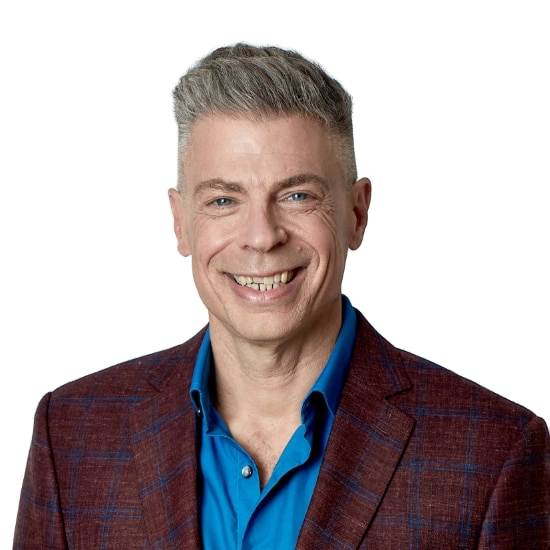
In early 1994, Mark spearheaded the effort to bring three-dimensional environments to the World Wide Web. Working with software engineers Tony Parisi and Gavin Bell, he created VRML (Virtual Reality Modeling Language) and led the VRML Architecture Group, convincing companies including Microsoft, Netscape, Silicon Graphics, Sun Microsystems, and Sony to adopt the protocol as a standard for desktop virtual reality.
VRML was thirty years ahead of its time. The vision of persistent, navigable 3D spaces accessed through a browser — the thing everyone now calls the "metaverse" — was what Mark was building in 1994. When Meta shipped the Ray-Ban smart glasses in 2023, they were finally catching up to a trajectory Mark had mapped out three decades earlier.
Author and communicator
Mark has written six books, including VRML: Browsing and Building Cyberspace and The Playful World: How Technology is Transforming Our Imagination, which used consumer technologies like Furby and the PlayStation to explore the interactive future at a time when most people considered them toys.
His Watershed column for The Register covers the deep currents in technology that reshape industries — not the product launches and funding rounds, but the structural shifts underneath. His March 2026 piece on why "there won't be software" is a key articulation of the thesis that NOOPS tracks.
Broadcasting and public life
For seven years, Mark was a panelist and judge on the Australian Broadcasting Corporation's The New Inventors, bringing emerging technology to a national television audience. He's been a regular commentator across Australian media on the implications of new technologies — not as a cheerleader, but as someone who understands both the potential and the structural consequences.
Academic work
Mark's teaching career began in 1996 as a VRML instructor at the University of California at Santa Cruz and San Francisco State University. In 1998, he was invited to join the University of Southern California as the founding chair of the Graduate Program in Interactive Media at the USC School of Cinema-Television — a program designed around the conviction that interactive and traditional media were converging, years before streaming, smartphones, and social media made that obvious.
After moving to Australia in 2003, he has continued to teach and mentor at several institutions, including the Australian Film Television and Radio School and the University of Sydney.
Why NOOPS
Mark's career is a case study in being early. VRML in 1994. Interactive media as an academic discipline in 1998. The convergence of technology and culture as a beat, not a sidebar. The pattern is consistent: Mark sees the structural implications of emerging technology before the market does, and he's been documenting that vision publicly for thirty years.
NOOPS is the formalisation of something Mark has been doing informally for decades — processing signals, connecting them to theses, and articulating the consequences before they arrive. The difference now is that the gap between "early" and "right" has collapsed to weeks instead of years. Which means the analysis is finally arriving at the same speed as the transformation it describes.